· ·
Tap to switch your region
Highway · Retail · Fleet · Public Networks

DC & ultra-fast charging.
30 to 720 kW.
Filter and pick.

Wall-mount, standalone, premium-screen, or split-cabinet — four architectures spanning entry retail to highway-corridor hyper-hubs. Filter by power below to see the families that fit your site.

4
Families
20
SKUs
$16,650
From · ETL Listed
720 kW
Max output
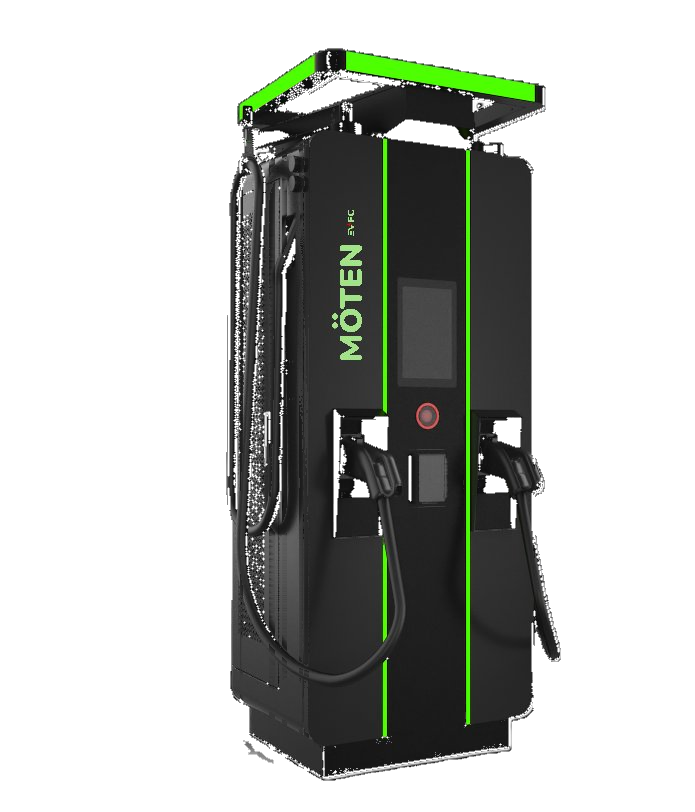
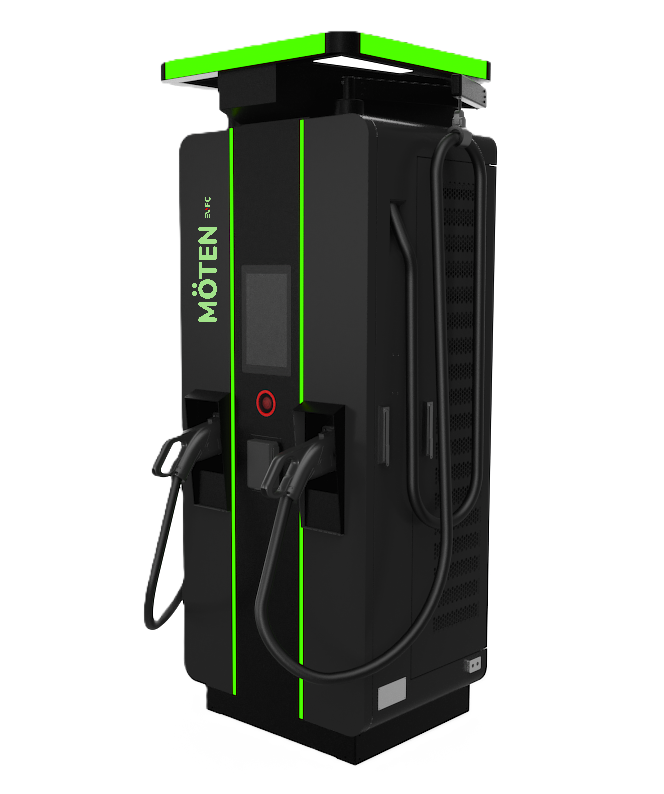
MÖTEN FALCÃO DC fast charger — standalone column, 40 to 360 kW FALCÃO · Flagship Family
02 · Power Filter

What power do you need?

Pick a power band and the family grid below filters to families that ship at that level. Rule of thumb: more dwell time = lower kW.

Showing all 4 families · 20 SKUs total

Selection updates the families below
30 kW
Wall-Mount · ETL

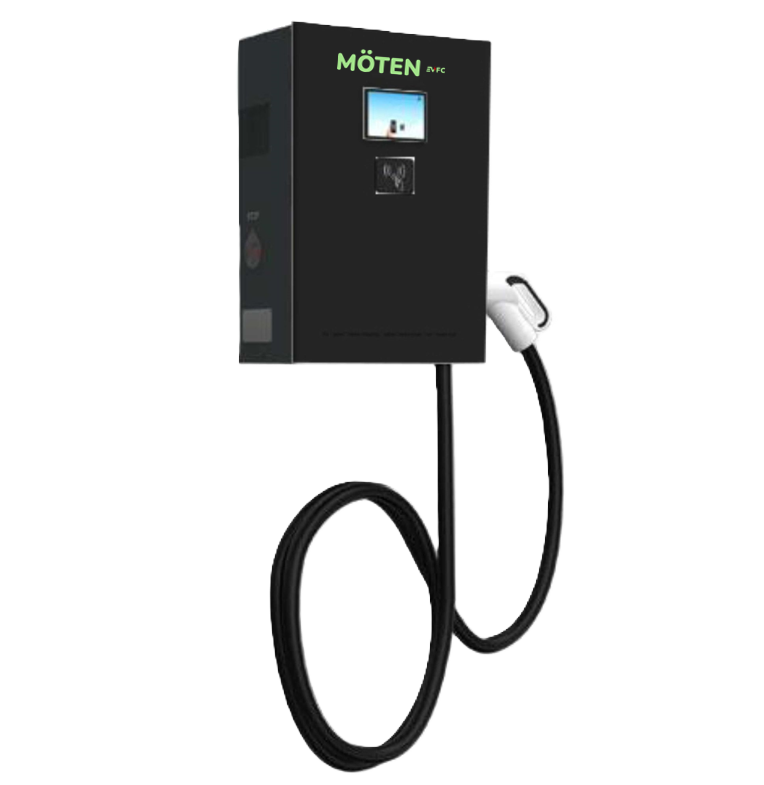
PEGASUS

Compact wall-mount DCFC for sites that can't afford a column.

Power 30–40 kW
2 SKUs 30–40 kW
Wall-mount · CCS1 · ETL Listed
See your country page for pricing
Wall-mount form factor
CCS1 standard
OCPP 2.0.1
~30 min to 80%
Best for Tight retail footprints, single-bay installs, fleet midday top-ups where space is the constraint.
View PEGASUS specs
DCFC 240 kW CCS1 CHAdeMO FALCÃO
Standalone · ETL

FALCÃO

The workhorse standalone — broadest power range, widest connector options.

Power 40–360 kW
8 SKUs 40–360 kW
Standalone · CCS1 / CHAdeMO · LC option
See your country page for pricing
Standalone column
CCS1 + CHAdeMO option
Liquid-cooled at 360 kW
~20 min to 80%
Best for Most commercial DCFC sites — corridor charging, retail with dwell, fleet hubs, single-stall public.
View FALCÃO specs
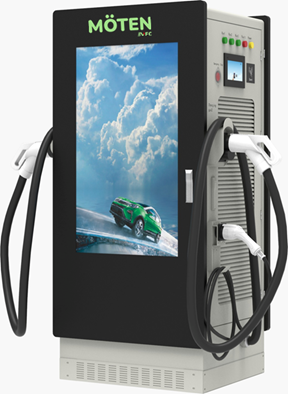
SPHINX 350 kW · LIQUID-COOLED TAP TO START
Premium · 32" Display

SPHINX

Premium DCFC with 32-inch advertising display. Branded networks, retail-grade UX.

Power 240–360 kW
3 SKUs 240–360 kW
Premium screen · CCS1 / CHAdeMO · LC option
See your country page for pricing
32" advertising display
Apple/Google Pay
Liquid-cooled at 360 kW
~15 min to 80%
Best for Branded charging networks, premium retail, hotel/hospitality where the kiosk experience is the brand.
View SPHINX specs
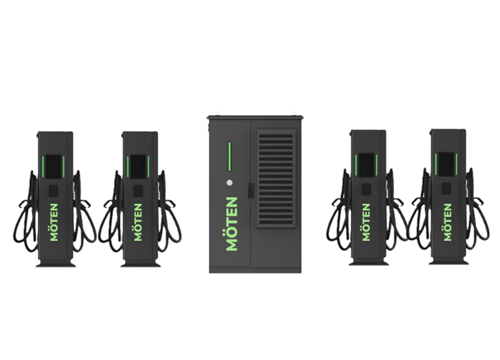
CABINET 720 kW max SHARED POWER D1 D2 D3 D4
Split-Cabinet System

KOMODO

One power cabinet feeds multiple dispensers. Power-sharing for hyper-hubs.

Cabinet 240–720 kW
7 SKUs 240–720 kW
Cabinet + dispensers · power-sharing · CCS1 / CCS2
See your country page for pricing
Power-share architecture
4D = 4-dispenser system
Up to 720 kW total
Lower demand per port
Best for Highway hyper-hubs, public networks with 4+ stalls, sites where load-sharing is critical.
View KOMODO specs
04 · Architecture

Form factor before power.

Power gets all the headlines, but the physical architecture makes or breaks deployments. Wall, standalone, or split-cabinet — pick based on your site, then dial in kW.

DCFC
Architecture A

Wall-Mount

No column. No pad. Bolt to the wall, run conduit, energize.

Power
30–40 kW
Footprint
Smallest
From
$16,650 USD
Connectors
CCS1 / CCS2
Pick this if you have…
  • A solid wall to mount to (parking structure, building façade)
  • 1 or 2 stalls and don't want to lose space to a column
  • Lower-power need (commute charging, fleet midday top-up)
  • Tight retail footprint, short permitting tolerance
See PEGASUS
DCFC 240 kW
Architecture B

Standalone

All-in-one column. Plant it on a pad, run conduit, energize.

Power
40–360 kW
Footprint
Medium
From
$23,400 USD
Connectors
CCS1 / CCS2 / CHAdeMO
Pick this if you have…
  • 1 to 4 stalls, each at independent power levels
  • An open lot or parking surface (concrete pad needed)
  • Mid-to-high power need (40 to 360 kW)
  • Branded retail or hospitality where the kiosk is the customer touchpoint
See FALCÃO & SPHINX
CAB 720 kW ×3+
Architecture C

Split-Cabinet

One cabinet feeds many dispensers. Power flexes where vehicles need it.

Cabinet
240–720 kW
Footprint
Cab + dispensers
Cab from
$34,200 USD
Architecture
Power-sharing
Pick this if you have…
  • 4 or more stalls (highway hub, large public network, large fleet)
  • Need for dynamic power-sharing across stalls
  • Lower per-port demand charges as a priority
  • Plans to scale ports without adding utility service
See KOMODO
05 · Specs & Pricing Matrix

20 SKUs. Every price visible.

Every DCFC SKU we ship — power, connectors, liquid-cooling status, MAP price, and intended use. Need a formal quote with civils, transformer, and install? Request a site assessment.

Wall-Mount PEGASUS · 30/40 kW 2 SKUs · 30–40 kW · $16,650–$22,500 USD PEGASUS Page
SKUPowerConnectorsLiquid-CooledMAP (USD)Notes
PEGASUS-3030kWCCS1No$16,650Entry retail · single bay
PEGASUS-4040kWCCS1No$22,500Wall-mount · tight footprint
Standalone FALCÃO · 40 to 360 kW 8 SKUs · 40–360 kW · $23,400–$58,500 USD FALCÃO Page
SKUPowerConnectorsLiquid-CooledMAP (USD)Notes
FALCÃO-4040kWCCS1No$23,400Workplace · low-volume retail
FALCÃO-6060kWCCS1CHAdeMONo$25,200Mid-power retail · 30-min dwell
FALCÃO-120120kWCCS1CHAdeMONo$29,700QSR · 20-min dwell
FALCÃO-180180kWCCS1CHAdeMONo$36,900High-traffic retail
FALCÃO-200200kWCCS1CHAdeMONo$38,700Highway · sub-15 min dwell
FALCÃO-240240kWCCS1CHAdeMONo$40,500Highway · multi-stall hubs
FALCÃO-360360kWCCS1CHAdeMONo$49,500350-kW class · dual-cable
FALCÃO-360-LC360kWCCS1CHAdeMOYes$58,500350-kW class · liquid-cooled cable
Premium SPHINX · 240/360 kW 3 SKUs · 240–360 kW · $45,000–$63,000 USD SPHINX Page
SKUPowerConnectorsLiquid-CooledMAP (USD)Notes
SPHINX-240240kWCCS1CHAdeMONo$45,000Branded retail · large screen
SPHINX-360360kWCCS1CHAdeMONo$54,000350-kW class · dual-cable
SPHINX-360-LC360kWCCS1CHAdeMOYes$63,000350-kW class · liquid-cooled cable
Split-Cabinet KOMODO · 240–720 kW 7 SKUs · Cabinet + Dispenser · $9,450–$79,200 USD KOMODO Page
SKUPowerConfigurationLiquid-CooledMAP (USD)Notes
KOMODO-CAB-240240kWPower Cabinet$34,200Feeds up to 4 dispensers
KOMODO-CAB-360360kWPower Cabinet$44,100Mid-hub · power-sharing
KOMODO-CAB-480480kWPower Cabinet$54,900Highway hub · 4–6 dispensers
KOMODO-CAB-720720kWPower Cabinet$79,200Hyper-hub · up to 8 dispensers
KOMODO-DISP-2C2-Connector Dispenser$9,450Pairs with any KOMODO cabinet
KOMODO-4D-240240kWCabinet + 4 Dispensers$67,500Turnkey 4-stall hub
KOMODO-4D-360360kWCabinet + 4 Dispensers$72,900Turnkey 4-stall · higher headroom
Notes: All units ETL listed. CCS2 variants are available for AE/SA/AU/NZ regions. CHAdeMO is an option on FALCÃO 60 kW+ and all SPHINX models. Liquid-cooled (-LC) cables required for sustained 350+ kW delivery. Free shipping on all MÖTEN chargers. Civil works, transformer upgrade, and install are quoted per site. For a turn-key delivered price including civils, permitting, and install, request a site assessment.
Flagship · Battery-Buffered DCFC

Need DCFC where the grid says no?

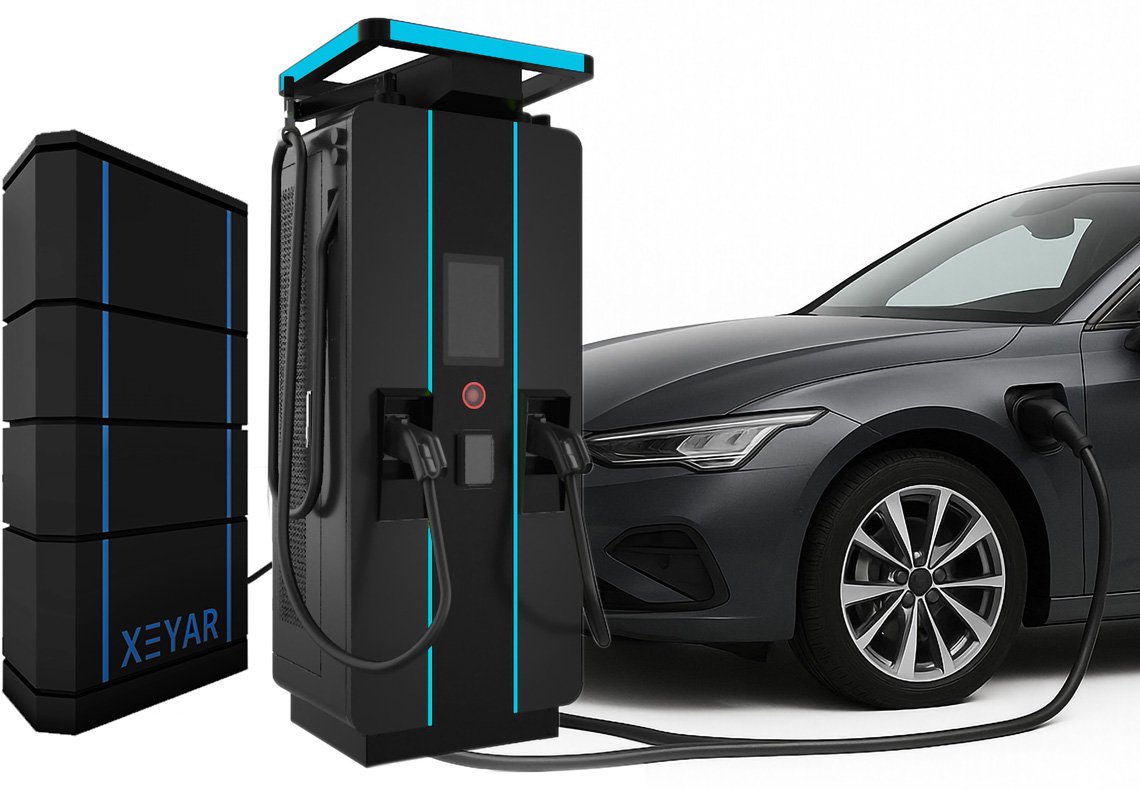
Some sites can't get the utility service for a 240 kW DCFC — the transformer's full, the upgrade is a 9-month wait, or the demand charge math doesn't pencil. XEYAR is our battery-buffered DCFC: 240 or 360 kW vehicle-side delivery on a 60 kW grid feed. It lives on our flagship Battery Buffered page.

Sound familiar?
  • Utility quoted 6+ months and a $200k+ transformer upgrade
  • Demand charges add $3,000–$8,000 per month per port
  • You want VPP / grid-services revenue alongside charging revenue
  • Site needs charging today, the grid says next year
MÖTEN XEYAR Battery-Buffered DCFC — battery storage + fast charging on slow grid input
10× Less
grid demand
VPP Revenue
opportunity
08 · FAQ

Common DCFC questions.

Eight questions we hear from operators planning their first or fiftieth DCFC site. Don't see yours? Reach our DCFC engineering team.

How fast is DC fast charging compared to Level 2?
DC fast charging is roughly 5 to 30 times faster than Level 2. A 50 kW DCFC adds about 100 miles of range in 20 minutes. A 150 kW unit adds 200 miles in the same time. A 350 kW liquid-cooled ultra-fast unit can take a compatible vehicle from 10% to 80% in under 20 minutes. Level 2 by contrast adds 25 to 40 miles per hour. The trade-off: DCFC requires 480 V three-phase service and costs 10 to 30 times more per port. Note: "ultra-fast" is the industry term for chargers above 150 kW, with 350 kW+ being the typical ceiling per port.
Which connectors do MÖTEN DC fast chargers support?
All MÖTEN DCFC units ship CCS1 (Combined Charging System Type 1) by default for North American deployments. CCS2 variants are available for AE, SA, AU, and NZ regions. CHAdeMO is available as a second connector option on FALCÃO 60 kW and higher units, primarily for legacy fleet support. Native NACS (Tesla) is on the product roadmap for late 2026; until then, NACS-equipped vehicles charge via a NACS-to-CCS1 adapter.
What's the typical install timeline for a DC fast charger?
Plan for 3 to 9 months from contract to energization, depending on utility coordination. Permitting alone is typically 4 to 12 weeks. If a transformer upgrade is required (most sites need one for 150 kW+ deployments), utility coordination adds 3 to 6 months. Civil works (concrete pad, conduit) are typically 2 to 6 weeks. The actual hardware install is fast — usually 1 to 3 days. We provide a free site assessment before quote to give you a realistic timeline.
What about demand charges? Will a DCFC blow up my utility bill?
Demand charges are the single biggest operational cost concern for DCFC operators. A 150 kW unit firing once per day can add several thousand dollars per month to a commercial bill. There are three mitigation paths: (1) negotiate a dedicated EV-tariff with your utility, available in many regions; (2) use power-sharing architectures like KOMODO that cap site demand; (3) install a battery-buffered DCFC like XEYAR (our flagship) which decouples vehicle charging from grid demand. We model demand charges as part of every site assessment.
Are MÖTEN DCFC chargers OCPP compliant?
Yes. All MÖTEN DCFC units ship OCPP 1.6J compliant out of the box and are firmware-upgradable to OCPP 2.0.1. They work with the eMÖTEN charger management system included with every MÖTEN charger, or any OCPP-compliant third-party network — without vendor lock-in.
When should I choose a wall-mount vs standalone vs split-cabinet DCFC?
Wall-mount (PEGASUS, 30 to 40 kW) is for tight footprints — small retail, single-bay installs, where you can't lose a parking space to a column. Standalone (FALCÃO 40 to 360 kW; SPHINX 240 to 360 kW) is the workhorse for most sites — open lots, fleet hubs, single high-power stalls. Split-cabinet (KOMODO 240 to 720 kW total) is for hyper-hubs where you want one power cabinet feeding multiple dispensers and dynamic power-sharing across stalls — typical for highway corridors and large public networks.
What's the difference between liquid-cooled and standard cables?
Standard CCS cables are limited to about 200 amps before they get too thick to handle. Liquid-cooled cables circulate coolant inside the cable, allowing 500 amps with a thinner, lighter cable that drivers can actually maneuver. Liquid cooling is required for 350 kW+ charging at automotive voltage. The 360 kW-LC variants of FALCÃO and SPHINX include liquid-cooled cables; the standard 360 kW variant uses a heavier-gauge dual-cable design.
What's the warranty on DC fast chargers?
3 years parts and labor on the charger, including power modules, contactors, and connectors. Liquid-cooling systems carry a separate 1-year warranty due to consumable coolant. Extended plans up to 5 and 7 years are available with on-site response SLAs. eMÖTEN CMS is included with every MÖTEN charger.
Free site assessment

Show us your site.

Send a satellite photo, your panel schedule, and your monthly utility bill — we'll come back with a power study, transformer-upgrade verdict, demand-charge forecast, and rebate-stacking plan. Usually within 3 business days. No commitment.