EV Chargers — Home, L2, DCFC & Battery Buffered | MÖTEN
· ·
Tap to switch your region
The MÖTEN Lineup

Five hardware families. One platform.

Built to scale from a single home charger to a 360 kW corridor hub — all running on the same eMÖTEN CMS, backed by the same warranty, supported by the same engineers.

Software Companion

eMÖTEN CMS — included with every MÖTEN charger.

Full charger management software (OCPP 2.0.1, payments, dynamic load balancing). Bundled free with MÖTEN hardware, or available standalone for any OCPP-compliant brand. Three tiers: AURIGA, CARINA, SAGITTA.

Explore eMÖTEN CMS
Quick Comparison

Compare the lineup, side by side.

Power, use case, buffering, and starting price — at a glance.

Feature Home Commercial L2 DC Fast Battery Buffered Flagship
Power Range 7.7–19.2 kW 11.5–19.2 kW 30–360 kW Up to 720 kW total
Typical Site Driveway / garage Workplace · MDU · retail Highway · fleet hub MDU · workplace · depot
Buffered Option N/A No No Yes
Panel Upgrade Not needed Sometimes Usually required Avoided
Monetization No Optional Yes Yes
OCPP 2.0.1 Yes Yes Yes Yes
eMÖTEN CMS Included Yes Yes Yes Yes
Warranty 3 yr 3 yr 3 yr 3 yr + extended
Free Shipping Yes Yes Yes Yes
Starting At $500 $1,100 $18,500 $23,000
USD pricing. Volume & project pricing available. Swipe to see all columns
Frequently Asked Questions

Picking the right charger, simplified.

Common questions about which MÖTEN evfc product family is right for your site, what's included, and how the lineup compares.

Which MÖTEN evfc charger is right for my site?

It depends on three factors: where the charger goes, how long vehicles stay, and what your electrical service can support.

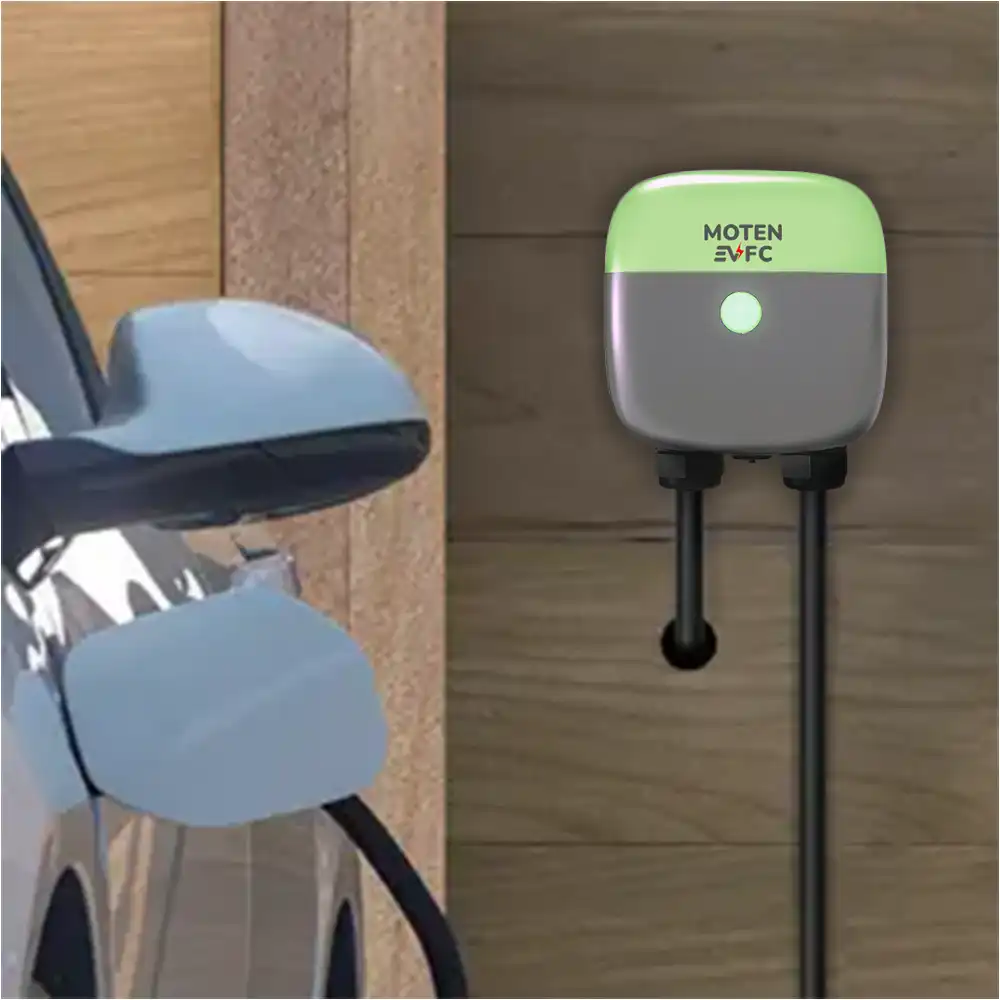
For a single home or driveway, Home Chargers (Taurus, Aquila, Dorado) start at $500. For a workplace, multi-family residential, or retail site where vehicles dwell 4+ hours, Commercial Level 2 (BOÖTES, LYNX, DRACO, PHOENIX) starts at $1,100. For highway corridors, fleet hubs, or fast turnover, DC Fast Chargers (PEGASUS, FALCÃO, SPHINX, KOMODO) start at $18,500.

If your site has limited electrical capacity or you want to avoid a $50K–$200K transformer upgrade, the patented Battery Buffered family runs up to 720 kW of EV charging on a 100 A service and earns VPP revenue. Talk to sales engineering for a site-specific recommendation.

What's included with every MÖTEN evfc charger?

Every MÖTEN evfc hardware order includes three things competitors charge separately for:

(1) Free shipping on MÖTEN hardware — included on every order, no freight charges. Worth approximately $50 per L2 charger and $2,500 per DCFC unit. (2) Free eMÖTEN CMS with every MÖTEN charger — full charger management, OCPP 2.0.1, payment processing, dynamic load management, and reporting. Equivalent enterprise CMS platforms charge $300–$600 per port per year for similar functionality. (3) Standard 3-year warranty with extended options available, plus phone and email support from MÖTEN engineers (not a call center).

Battery Buffered systems also include the patented XEYAR shared DC bus architecture and DRACO Energy Storage System integration.

What's the difference between BOÖTES, LYNX, DRACO, and PHOENIX?

These are the four Commercial Level 2 charger families, split by monetization and power class:

Non-monetized (no payment terminal — for fleet, workplace, multi-family): BOÖTES at 48 A is the value option. LYNX at 48 A or 80 A is the IP65 premium with weather-sealed enclosure for outdoor installations.

Monetized (built-in payment terminal — for retail, hotel, public parking): DRACO at 48 A handles standard public charging. PHOENIX at 48 A or 80 A is the IP65 flagship with the highest L2 power per port.

All four families are available in cluster configurations under our Battery Buffered line as well, e.g., LYNX48-B50N-12C.

What's the difference between PEGASUS, FALCÃO, SPHINX, and KOMODO?

These are the four DC Fast Charger families, organized by form factor and power range:

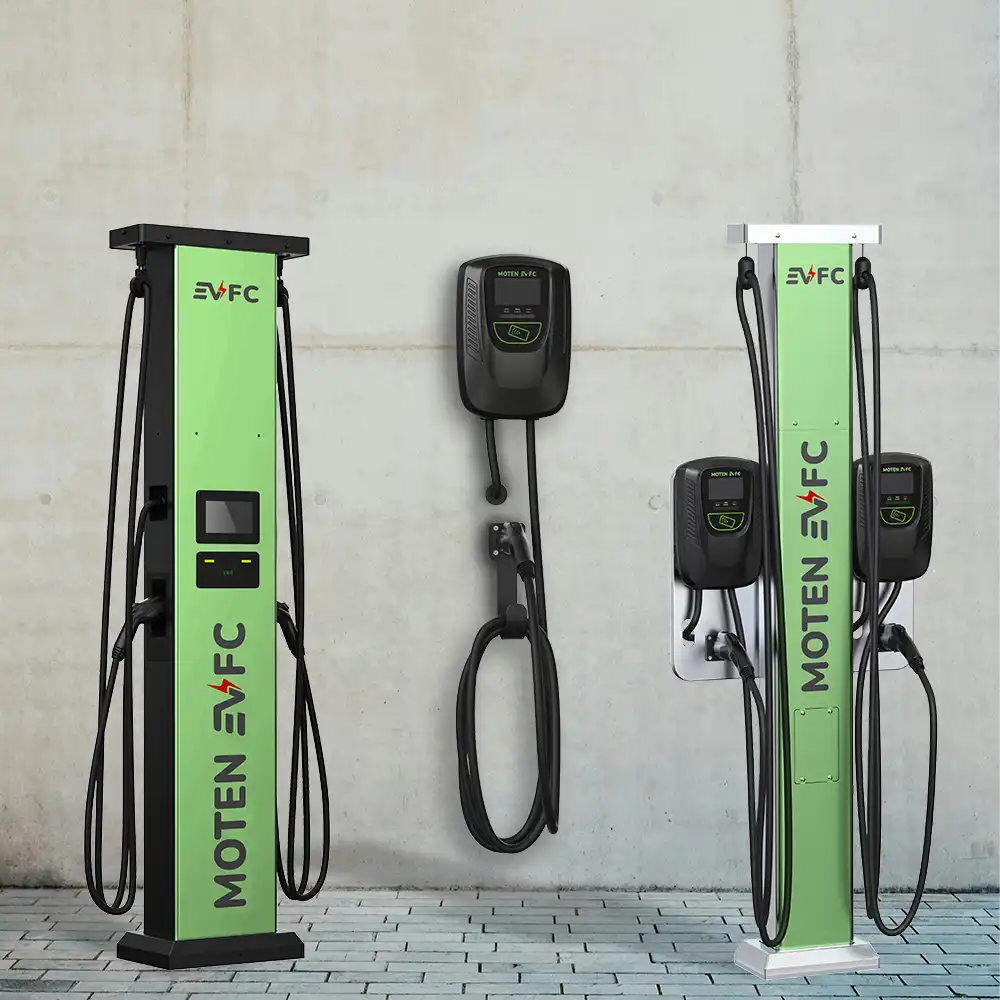
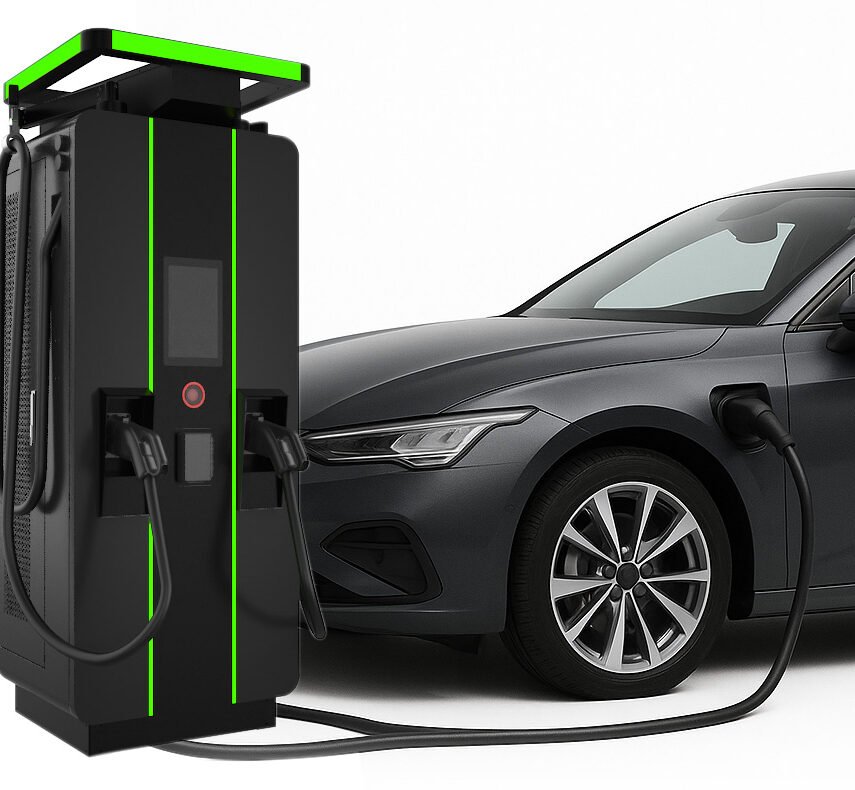
PEGASUS (30 kW or 40 kW) is wall-mounted, ETL listed — the entry DCFC option for small lots and supplemental fast charging. FALCÃO (40–360 kW) is the standalone workhorse, ETL listed, covering everything from light commercial to highway hubs.

SPHINX (240 kW or 360 kW) is the High-Power Charger with advanced screen interface, designed for premium retail/hospitality sites. KOMODO (240–720 kW total) is a split-cabinet system with separate dispensers, supporting up to 12 dispensers per cabinet — designed for high-throughput fleet hubs and corridor stations.

All four families are available as XEYAR-buffered clusters when site electrical capacity is limited.

What is Battery Buffered charging and why is it your flagship product?

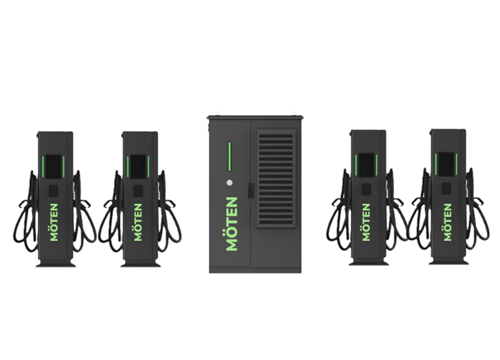
Battery Buffered charging uses an on-site energy storage system — the DRACO ESS — sitting between the electrical grid and the chargers. The patented XEYAR shared DC bus architecture lets grid input and battery discharge be simultaneous and additive. This means a 100 A standard service can drive up to 720 kW of EV charging.

It's our flagship because it solves the biggest blocker in commercial EV charging deployment: not having enough electrical service on your site. Skip the 6–18 month utility upgrade, skip the $50K–$200K transformer cost, and earn $8K–$60K per year in VPP grid arbitrage on top. Patent applications pending in the US (PPA Rev.12) and Canada (CIPO FIG.1).

Explore Battery Buffered →

Is the eMÖTEN CMS really free with every MÖTEN charger?

Yes. The eMÖTEN Charger Management System is free with every MÖTEN evfc hardware purchase, for as long as you own the charger. This includes OCPP 2.0.1 protocol support, dynamic load management certified to NEC 625.42(A), payment terminal integration on monetized chargers, fleet management, energy reporting, and three-tier access (AURIGA, CARINA, SAGITTA).

For comparison, equivalent enterprise CMS platforms charge approximately $300–$600 per port per year for similar CMS functionality. On a 12-port site, that's $3,600–$7,200 per year in software costs avoided. Over a 10-year deployment, the CMS savings alone can exceed $50,000 per site.

If you have non-MÖTEN hardware (any OCPP-compliant brand), eMÖTEN CMS is also available as a standalone subscription. Learn more about eMÖTEN →

Are MÖTEN chargers compatible with Tesla NACS and CCS?

Yes. L2 chargers ship standard with the SAE J1772 connector (the universal Level 2 standard) and are compatible with every EV sold in North America, including Tesla vehicles using their J1772 adapter.

DCFC products (PEGASUS, FALCÃO, SPHINX, KOMODO) are available with both CCS1 (the established North American DCFC standard) and NACS (the new SAE J3400 / Tesla connector standard adopted by GM, Ford, Honda, and most major OEMs starting in 2025). Many configurations support dual-connector dispensing.

All chargers communicate via OCPP 2.0.1 with the eMÖTEN CMS, ensuring backend compatibility with utility programs, fleet operators, and roaming networks.

How do I get a quote or buy MÖTEN evfc chargers?

There are five ways to buy, depending on your situation:

(1) Direct on evfc.com — best price, fastest shipping, full inventory. (2) Amazon Marketplace — same MAP price, FBA fulfillment for small orders. (3) Drop-Ship Distributor — if you're working with an existing distributor partner. (4) Contractor Direct — bulk volume pricing for licensed electrical contractors. (5) KES Wholesale Premier Partner network — for international and territory-protected installations.

For projects with 4+ chargers (Project tier 5%), 10+ (Fleet tier 8%), or 25+ (Enterprise tier 12%), structured volume pricing applies in every channel. Talk to sales engineering for a site assessment, custom quote, or to discuss the right channel for your project.

Need a recommendation?

Our sales engineers will help you pick the right charger for your site, electrical service, and use case.

Talk to Sales Engineering
Frequently Asked Questions

Picking the right charger, simplified.

Common questions about which MÖTEN evfc product family is right for your site, what's included, and how the lineup compares.

Which MÖTEN evfc charger is right for my site?

It depends on three factors: where the charger goes, how long vehicles stay, and what your electrical service can support.

For a single home or driveway, Home Chargers (Taurus, Aquila, Dorado) start at $500. For a workplace, multi-family residential, or retail site where vehicles dwell 4+ hours, Commercial Level 2 (BOÖTES, LYNX, DRACO, PHOENIX) starts at $1,100. For highway corridors, fleet hubs, or fast turnover, DC Fast Chargers (PEGASUS, FALCÃO, SPHINX, KOMODO) start at $18,500.

If your site has limited electrical capacity or you want to avoid a $50K–$200K transformer upgrade, the patented Battery Buffered family runs up to 720 kW of EV charging on a 100 A service and earns VPP revenue. Talk to sales engineering for a site-specific recommendation.

What's included with every MÖTEN evfc charger?

Every MÖTEN evfc hardware order includes three things competitors charge separately for:

(1) Free shipping on MÖTEN hardware — included on every order, no freight charges. Worth approximately $50 per L2 charger and $2,500 per DCFC unit. (2) Free eMÖTEN CMS with every MÖTEN charger — full charger management, OCPP 2.0.1, payment processing, dynamic load management, and reporting. Equivalent enterprise CMS platforms charge $300–$600 per port per year for similar functionality. (3) Standard 3-year warranty with extended options available, plus phone and email support from MÖTEN engineers (not a call center).

Battery Buffered systems also include the patented XEYAR shared DC bus architecture and DRACO Energy Storage System integration.

What's the difference between BOÖTES, LYNX, DRACO, and PHOENIX?

These are the four Commercial Level 2 charger families, split by monetization and power class:

Non-monetized (no payment terminal — for fleet, workplace, multi-family): BOÖTES at 48 A is the value option. LYNX at 48 A or 80 A is the IP65 premium with weather-sealed enclosure for outdoor installations.

Monetized (built-in payment terminal — for retail, hotel, public parking): DRACO at 48 A handles standard public charging. PHOENIX at 48 A or 80 A is the IP65 flagship with the highest L2 power per port.

All four families are available in cluster configurations under our Battery Buffered line as well, e.g., LYNX48-B50N-12C.

What's the difference between PEGASUS, FALCÃO, SPHINX, and KOMODO?

These are the four DC Fast Charger families, organized by form factor and power range:

PEGASUS (30 kW or 40 kW) is wall-mounted, ETL listed — the entry DCFC option for small lots and supplemental fast charging. FALCÃO (40–360 kW) is the standalone workhorse, ETL listed, covering everything from light commercial to highway hubs.

SPHINX (240 kW or 360 kW) is the High-Power Charger with advanced screen interface, designed for premium retail/hospitality sites. KOMODO (240–720 kW total) is a split-cabinet system with separate dispensers, supporting up to 12 dispensers per cabinet — designed for high-throughput fleet hubs and corridor stations.

All four families are available as XEYAR-buffered clusters when site electrical capacity is limited.

What is Battery Buffered charging and why is it your flagship product?

Battery Buffered charging uses an on-site energy storage system — the DRACO ESS — sitting between the electrical grid and the chargers. The patented XEYAR shared DC bus architecture lets grid input and battery discharge be simultaneous and additive. This means a 100 A standard service can drive up to 720 kW of EV charging.

It's our flagship because it solves the biggest blocker in commercial EV charging deployment: not having enough electrical service on your site. Skip the 6–18 month utility upgrade, skip the $50K–$200K transformer cost, and earn $8K–$60K per year in VPP grid arbitrage on top. Patent applications pending in the US (PPA Rev.12) and Canada (CIPO FIG.1).

Explore Battery Buffered →

Is the eMÖTEN CMS really free with every MÖTEN charger?

Yes. The eMÖTEN Charger Management System is free with every MÖTEN evfc hardware purchase, for as long as you own the charger. This includes OCPP 2.0.1 protocol support, dynamic load management certified to NEC 625.42(A), payment terminal integration on monetized chargers, fleet management, energy reporting, and three-tier access (AURIGA, CARINA, SAGITTA).

For comparison, equivalent enterprise CMS platforms charge approximately $300–$600 per port per year for similar CMS functionality. On a 12-port site, that's $3,600–$7,200 per year in software costs avoided. Over a 10-year deployment, the CMS savings alone can exceed $50,000 per site.

If you have non-MÖTEN hardware (any OCPP-compliant brand), eMÖTEN CMS is also available as a standalone subscription. Learn more about eMÖTEN →

Are MÖTEN chargers compatible with Tesla NACS and CCS?

Yes. L2 chargers ship standard with the SAE J1772 connector (the universal Level 2 standard) and are compatible with every EV sold in North America, including Tesla vehicles using their J1772 adapter.

DCFC products (PEGASUS, FALCÃO, SPHINX, KOMODO) are available with both CCS1 (the established North American DCFC standard) and NACS (the new SAE J3400 / Tesla connector standard adopted by GM, Ford, Honda, and most major OEMs starting in 2025). Many configurations support dual-connector dispensing.

All chargers communicate via OCPP 2.0.1 with the eMÖTEN CMS, ensuring backend compatibility with utility programs, fleet operators, and roaming networks.

How do I get a quote or buy MÖTEN evfc chargers?

There are five ways to buy, depending on your situation:

(1) Direct on evfc.com — best price, fastest shipping, full inventory. (2) Amazon Marketplace — same MAP price, FBA fulfillment for small orders. (3) Drop-Ship Distributor — if you're working with an existing distributor partner. (4) Contractor Direct — bulk volume pricing for licensed electrical contractors. (5) KES Wholesale Premier Partner network — for international and territory-protected installations.

For projects with 4+ chargers (Project tier 5%), 10+ (Fleet tier 8%), or 25+ (Enterprise tier 12%), structured volume pricing applies in every channel. Talk to sales engineering for a site assessment, custom quote, or to discuss the right channel for your project.

Need a recommendation?

Our sales engineers will help you pick the right charger for your site, electrical service, and use case.

Talk to Sales Engineering
3yr+
Warranty + Extended
48h
Ships from US Stock
$0/mo
CMS with every MÖTEN charger
Certified · Compliant · Worldwide
ETL Listed (UL 2231/2251) cUL CSA CE FCC ENERGY STAR OCPP 2.0.1 IEC 61851
Need help choosing?

Talk to a real engineer — usually within 24 hours.